







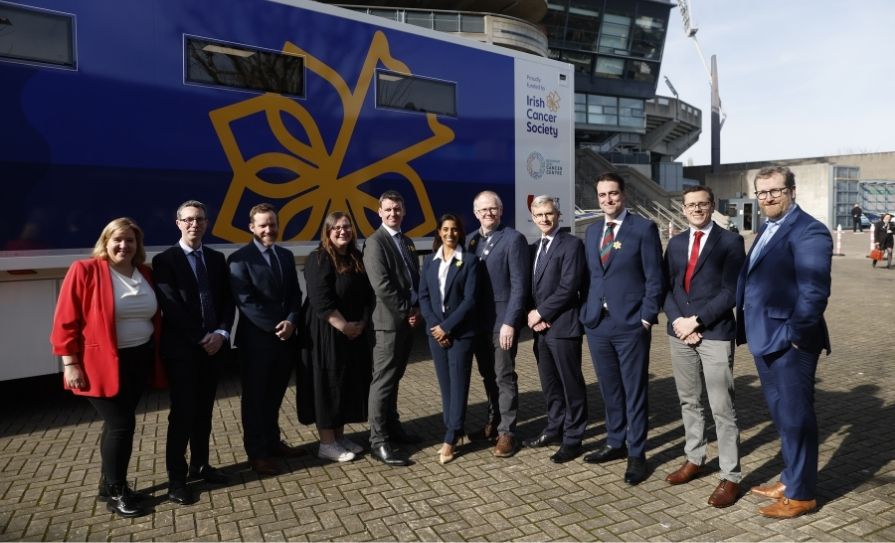
An update on the pilot Irish lung screening project, which won the Public and Patient Partnership Award at the recent Irish Cancer Society Research Awards
Lung cancer remains the leading cause of cancer death across Europe and worldwide, with most people diagnosed when the disease is already at an advanced stage. In Ireland, the latest statistics from the National Cancer Registry of Ireland indicate that the disease is responsible for one in every five deaths from cancer, making it the leading cause of cancer mortality. However, the use of low-dose CT (LDCT) screening has the potential to change these numbers and save lives.
Nearly 15 years ago, the National Lung Screening Trial in the US showed a reduction in mortality in high-risk individuals who underwent LDCT screening. This was followed by the publication of the NELSON trial in 2020, which demonstrated a reduction in lung cancer mortality of up to 24 per cent in men, with even greater benefit suggested in women. Despite this evidence, few countries have introduced national screening programmes and it was not until 2022 that lung cancer was included in the updated EU Council recommendations on cancer screening. Even where screening exists, many countries struggle to reach the people most at risk. This is often due to stigma associated with smoking, practical barriers, mistrust of healthcare systems, or fear of the disease itself.
In 2023, the SOLACE (Strengthening the Screening of Lung Cancer in Europe) project was funded through EU4Health under Europe’s Beating Cancer Plan. It aims to support countries to introduce screening programmes that are evidence-based, accessible, and designed in ways that reduce inequalities rather than widen them. This includes understanding how programmes can reach people in deprived or hard to reach areas, women (who are often under-reached in many pilots), and those with chronic lung conditions. Recent multi-country updates suggest that practical design choices such as community-based delivery, tailored communication, and working with local partners, all play a key role in whether people attend screening at all. Ireland does not yet have a national lung screening programme, but it is one of 15 countries contributing to SOLACE. In 2025, the first lung cancer screening pilot was launched in Ireland.
Irish lung screening experience
The Beaumont RCSI Irish Cancer Society Lung Health Check is Ireland’s first community-based lung screening pilot. It forms part of the largest single investment in lung cancer in Ireland’s history, supported by both the Irish Cancer Society and EU4Health SOLACE. The programme is led by Prof Jarushka Naidoo, Consultant Medical Oncologist, Beaumont Hospital; Prof Daniel Ryan, Consultant Respiratory Physician, Beaumont Hospital; and Prof Patrick Redmond, GP and Associate Professor in General Practice, RCSI University of Medicine and Health Sciences, with support from a large multidisciplinary clinical, operational, and research team, including patient advocacy partners representing the Irish lung cancer community and programme manager Dr Sandra Roche. This is further supported by a steering committee of more than 20 members, comprising thoracic surgery, respiratory medicine, oncology, data science, and hospital and university management.
The pilot invites people at high risk, identified through selected GP practices, to attend a mobile unit for a respiratory assessment and an LDCT scan. The mobile units are deliberately located within community settings, most notably local GAA clubs, bringing screening closer to where people live, and reducing a key barrier to uptake. In practical terms, the pilot is testing whether lung cancer screening can be delivered effectively in the community, while also assessing participation and acceptability, detecting early-stage disease, identifying respiratory conditions such as COPD, and supporting biomarker research.
The design reflects elements of successful European programmes, while also being adapted to the realities of the Irish system, where primary care and hospital services are structurally separate and consent pathways differ from other European countries. A closed-loop invitation model is used, whereby selected GP practices initiate the invitation, the study team performs the risk assessment, and follow-up is coordinated centrally. This helps maintain trust and avoids the sense of a ‘cold call’, which has been shown to deter attendance in other settings.
Importantly, the Irish pilot has achieved participation rates exceeding 70 per cent, which is considerably higher than many international programmes. By comparison, participation in the US has been estimated at 5.8 per cent while data from NHS England Targeted Lung Health Check sites suggests uptake in the region of 35 to 53 per cent. This suggests that the combination of community-based delivery and GP-linked pathways resonates with people who might otherwise avoid hospital-based screening. This is further supported by clear, multi-layered communication, education, and direct community engagement.
Why programme design matters
International experience shows that participation depends as much on how a programme is designed as on individual behaviour. This pilot provides a practical example of how specific design decisions and embedding patient-public involvement (PPI) from the very beginning can influence uptake. Framing the invitation as a ‘Lung Health Check’, rather than cancer screening, appears to reduce fear and encourage attendance, particularly for those who might otherwise avoid anything associated with a cancer diagnosis. Locating mobile units within community settings such as GAA grounds reduces both the travel burden and the perceived stigma associated with attending hospital-based services. Using an individual’s GP as the starting point is also important, as people are more likely to trust communication that comes directly from their own practice, rather than responding to unsolicited invitations. Keeping communication simple, neutral, and practical, alongside community engagement, helps ensure that the pilot feels accessible rather than overwhelming.
The role and recognition of PPI
A key element of this pilot is the approach to PPI, which was embedded from the outset rather than added as a later step. Patient advocates were part of the steering group from the beginning, contributing to the development of the pilot as a whole and leading on communication materials, community engagement strategies, and the overall language used to describe the pilot. In practical terms, this meant being at the table as the table was being built, rather than being asked to comment once decisions had already been made. This approach reflects a genuine co-design model. It recognises that people with lived experience often identify barriers that clinicians and researchers do not immediately see, including fear of judgement, uncertainty about what screening involves, or hesitation in engaging with healthcare services. PPI input influenced not only participant information materials and invitation approaches, but also how the programme was positioned within communities and how people were encouraged to engage with it in practice. This was not incidental. It demonstrates how meaningful involvement can shape programme design in ways that improve participation and equity. It also brings credibility when communities recognise that a programme has been shaped by people with similar experiences. In the context of lung cancer screening, where stigma and fear can act as significant barriers, that credibility is particularly important.
This extended to direct engagement with communities, including information evenings where common misconceptions could be addressed openly. These discussions included the role of smoking history as a key risk factor, as well as the more complex issue of lung cancer in people with no history of smoking. While this remains an important area of research, current high-quality evidence does not yet support reliable identification of this group for screening in the same way as those with a smoking history, who are known to be at higher risk and tend to develop biologically distinct disease. Addressing these points directly helped to build understanding and trust and ensured that communication around eligibility was both clear and evidence-based.
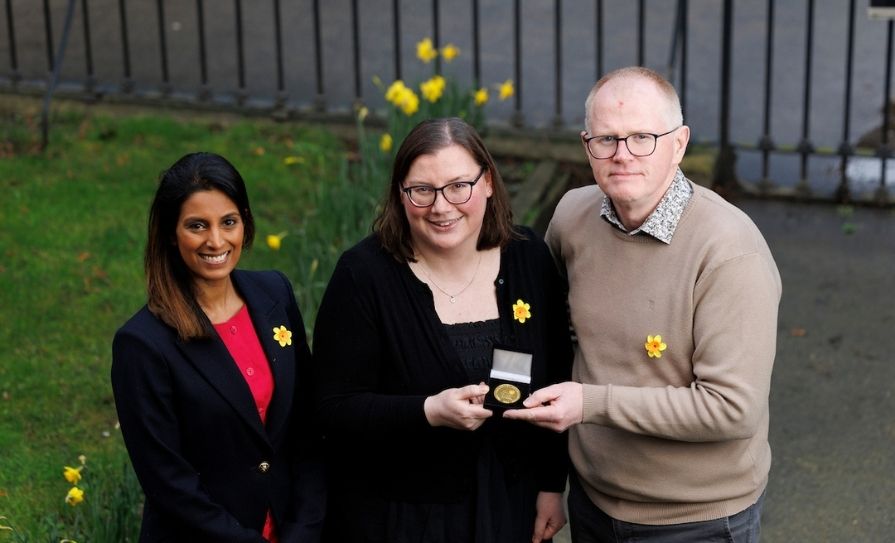
This work has been recognised at a national level. In February 2026, Beaumont RCSI Irish Cancer Society Lung Health Check pilot patient partners Dr Anne-Marie Baird and Mr Seamus Cotter received the Public and Patient Partnership Award from the Irish Cancer Society. The award acknowledged the central role of PPI in the pilot and the impact of patient voices in shaping both this research and its successful implementation in the real-world environment. Importantly, this recognition reflects more than individual contribution. It highlights a model of research and implementation in which patient partnership has influenced not only communication, but how the programme itself has been designed and delivered. In lung cancer screening, where participation is critical, this has practical implications for whether programmes succeed in reaching those most at risk.
Towards a national Lung Health Check programme
Lung cancer screening is now included on the National Screening Advisory Committee work programme, with further consideration dependent on the development of the cancer screening prioritisation framework. This process is likely to take time. Meanwhile, the burden of late-stage lung cancer remains high, and the evidence supporting earlier detection continues to grow, with early results from the Beaumont RCSI Irish Cancer Society Lung Health Check pilot expected later this year. As Ireland develops its next National Cancer Strategy, there is an opportunity to build on this work. This includes setting a clear direction for evaluating and implementing lung cancer screening, ensuring that assessment processes can progress without unnecessary delay, and continuing to support partnership models that bring together researchers, clinicians, the public, primary care, and community organisations. It also requires embedding PPI as standard practice and ensuring that early detection planning is aligned with system capacity, including radiology, respiratory services, and primary care. Ongoing engagement with European initiatives such as SOLACE will also be important to ensure alignment with emerging best practice.
The Beaumont RCSI Irish Cancer Society Lung Health Check pilot provides a timely and practical insight into what works on the ground. It demonstrates that early detection is not simply a technical issue, but one that depends on trust, access, and how a programme is designed. The exceptionally high participation rates seen in this pilot suggest that when screening is delivered in a way that reflects people’s needs, it can reach those who might otherwise not engage. Importantly, this is already translating into impact, with a number of individuals identified through the pilot now undergoing treatment including surgery with curative intent following an early-stage lung cancer diagnosis. The Irish Cancer Society Public and Patient Partnership Award reinforces this point. It highlights that patient partnership is not an optional extra, but a core component of designing screening programmes that people will use. What has been shown through this pilot is that when programmes are co-designed from the outset, delivered within communities, and supported by primary care, they can move beyond theory and into real-world impact.
The next step is to ensure that these lessons are carried forward into a national approach. This will require coordinated effort across clinicians, researchers, the public, primary care, policymakers, and community organisations. From design through to implementation, and ultimately to saving lives, lung cancer screening must be developed through a multidisciplinary and partnership-based approach. If done well, and delivered through an equity-focused lens, a national Lung Health Check programme has the potential to reduce late-stage diagnosis and improve outcomes for those most at risk, giving more people a real chance of treatment with curative intent.






Leave a Reply
You must be logged in to post a comment.