NOTE: By submitting this form and registering with us, you are providing us with permission to store your personal data and the record of your registration. In addition, registration with the Medical Independent includes granting consent for the delivery of that additional professional content and targeted ads, and the cookies required to deliver same. View our Privacy Policy and Cookie Notice for further details.
In patients with intermediate- high-risk pulmonary embolism, catheter-directed thrombolysis (CDT) improved short-term clinical outcomes compared with standard anticoagulation therapy alone, according to results presented in a Hot Line session at the ESC Congress 2026.
Prof Viktor Kočka and Dr Josef Kroupa from Charles University and University Hospital Kralovske Vinohrady, Prague, Czechia, led the PRAGUE-26 study, evaluating whether an interventional strategy can improve outcomes in patients with embolism.
“In contrast to interventions for myocardial infarction or stroke, there have been very few advances in the treatment of pulmonary embolism over the last 20 years. This has led to a considerable unmet clinical need that we can’t ignore,” explained Prof Kočka.
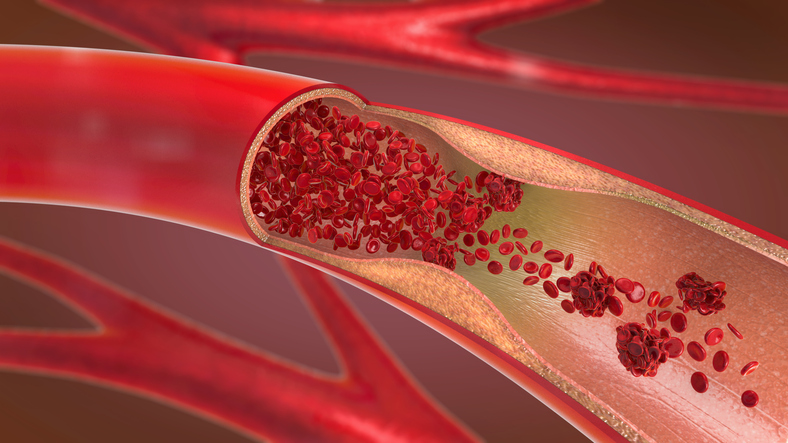
CDT is a simple and relatively inexpensive procedure, performed in the catheterisation laboratory, where thrombolytic medications are delivered directly to the clot in the pulmonary artery.
“The academic PRAGUE-26 trial aimed to challenge the current standard of care in intermediate- high-risk acute pulmonary embolism by determining whether conventional CDT (without ultrasound facilitation) can improve on anticoagulation alone,” noted Dr Kroupa.
At 11 sites in Czechia, patients with acute intermediate- high-risk pulmonary embolism (according to 2019 ESC guidelines) were randomised (1:1) to CDT or standard anticoagulation therapy alone (intravenous unfractionated heparin or subcutaneous low-molecular-weight heparin). The primary endpoint was a composite of all-cause mortality, pulmonary embolism recurrence or cardiorespiratory decompensation/collapse (defined according to pre-specified criteria) within seven days of randomisation. In total, 558 patients were randomised, with a median age of 64 years, and 41 per cent were women.
Prof Viktor Kočka
The primary endpoint was significantly reduced in the CDT group compared with the standard-care group (0.7% vs. 6.8%; relative risk 0.10; 95% CI 0.02 to 0.44; p<0.001). This difference was driven primarily by a lower rate of cardiorespiratory decompensation or collapse with CDT.
“The primary outcome finding was accompanied by early improvement in right ventricular strain on echocardiography, consistent with previous studies reporting favourable effects of CDT,” explained Dr Kroupa.
Regarding safety, there was no apparent difference in bleeding events between the CDT group and the standard-care group within seven days (4.6% vs 5.0%; p=0.846).
There were two cases of intracranial bleeding in the CDT group and none in the standard-care group. There were four deaths in the standard-care group within seven days and one death in the CDT group within 30 days.
Discussing the implications of the findings, Prof Kočka said: “Using the blueprint already employed for heart attacks, we were able to demonstrate that specialised interventional treatment can be delivered in tertiary care centres across our national network. This may pave the way for an improved, standardised approach to the treatment of pulmonary embolism, reducing the acute risks that patients face.”
He concluded by noting that new ESC guidelines on pulmonary embolism are due to be published next year.
“We hope the results from our trial with CDT will help to inform future recommendations,” he said.
The primary outcome finding was accompanied by early improvement in right ventricular strain on echocardiography, consistent with previous studies reporting favourable effects of CDT







Leave a Reply
You must be logged in to post a comment.